Popular Types of Software Development Services in 2026
The technology market is constantly evolving with an explosion of new trends. While legacy platforms continue to be aggressively optimized and upgraded. In this environment, digital transformation has turned owning an optimized software solution from a “nice-to-have” into a make-or-break necessity for every business.
Yet with so many software development models available — Fixed-Price, Time & Material, Dedicated Team, and everything in between — choosing the wrong one doesn’t just waste budget. It can derail timelines, damage product quality, and even threaten your entire business strategy.
So how can a business owner make the smartest possible decision?
This article gives you the complete roadmap: a full overview of the market, detailed comparison tables, and a clear step-by-step guide to help you identify the exact model that fits your unique goals, budget, and timeline. Keep reading — by the end, you’ll know precisely which approach is right for you.

Should you know types of software development services?
It is highly beneficial to know the major types of software development services.
Knowing these types is crucial for a number of reasons, whether you are a business owner, a project manager, a student, or a potential client looking to hire development talent. Here's why you should know them:
1. Better Decision Making
Understanding the options helps you choose the right solution for your specific problem. For instance, knowing the difference between Mobile App Development (Native vs. Cross-Platform) and Web Development will help you decide if you need a dedicated app or a responsive website, which significantly impacts budget and timeline.
2. Accurate Budgeting and Resource Allocation
Each service type has a different complexity level and requires different skill sets, which affects the cost. Custom Software Development is usually more expensive than using an off-the-shelf product.
AI/ML Development requires specialized data scientists and engineers, commanding a higher price point than basic web design. Knowing this allows for more accurate financial planning.
3. Clearer Communication with Developers
Familiarity with terms like DevOps, Cloud Services (AWS, Azure), Front-End/Back-End, and Quality Assurance (QA) allows you to articulate your needs clearly. This reduces misunderstandings, speeds up the requirements-gathering process, and helps you evaluate proposals effectively.
4. Identifying Business Opportunities
For business owners, understanding different service types can reveal new ways to innovate or solve operational challenges. For example, realizing that Automation and DevOps services can streamline your existing processes can be a huge competitive advantage.
5. Assessing Service Providers
When evaluating development agencies or freelancers, knowing the key service types enables you to verify if their expertise aligns with your project needs. If you need robust security, you'll look for expertise in Security Testing and Software Maintenance, not just basic web development.
In short, knowing the types of services gives you the framework and vocabulary needed to successfully navigate the software development landscape.
8 Popular Types of Software Development Services
1. Custom Software Development
Custom Software Development is the process of designing, creating, deploying, and maintaining software solutions that are built specifically to address the unique requirements, workflows, and business challenges of a particular organization. This approach stands in stark contrast to utilizing off-the-shelf software, which is designed to serve a broad user base with generic functionalities.

Custom software provides significant strategic advantages to a business:
- Perfect Fit: The software is built to integrate seamlessly with your existing business processes, maximizing efficiency and minimizing the need for employees to change how they work.
- Scalability: The solution is engineered to grow with your business, making it easy to add features or handle increasing user loads in the future.
- Competitive Advantage: Owning a proprietary tool can create a differential edge, helping you execute tasks more efficiently or offer unique services compared to competitors.
- Enhanced Security: You retain full control over security protocols and infrastructure, providing better protection for sensitive data.
- Reduced Long-Term Costs: While the initial outlay may be higher, custom software eliminates recurring licensing fees, costs for unneeded features, and the risk of integration failure inherent in off-the-shelf systems.
Examples: Enterprise Resource Planning (ERP) systems, Customer Relationship Management (CRM) tools, or proprietary industry-specific applications built from the ground up.
Discovery now Top On-Demand App Development Company
2. Web Development
Web Development is the process of designing, building, and maintaining all types of web-based applications, websites, and services that run on the internet. It encompasses everything from creating simple static pages to complex, feature-rich web applications (Web Apps).

Key Sub-Services in Web Development
Front-End Development
- What It Is: Focusing on the User Interface (UI) and User Experience (UX)—everything the user sees and interacts with directly in their web browser.
- Goal: Ensuring the website is accessible, responsive across different devices, visually appealing, and intuitive to use.
- Core Technologies: HTML, CSS, JavaScript, and frameworks like React, Angular, or Vue.js.
Back-End Development
- What It Is: Managing the server-side logic, databases, and application architecture. This is the invisible engine that powers the website.
- Goal: Ensuring data storage and retrieval, managing user authentication, processing form submissions, and ensuring high performance and security.
- Core Technologies: HTML, CSS, JavaScript, and frameworks like React, Angular, or Vue.js.
Full-Stack Development
- What It Is: Developers who are proficient in both front-end and back-end development. They can handle all layers of the application stack.
- Goal: Providing comprehensive oversight and efficient communication between the client-side and server-side of a project, often accelerating development timelines.
3. Mobile App Development
Mobile App Development is the process of creating applications specifically for mobile devices such as smartphones and tablets. These applications can be pre-installed, downloaded from an app store (like Apple App Store or Google Play Store), or accessed via a mobile web browser.

Key Sub-Services in Mobile App Development
Native App Development
- What It Is: Building separate, dedicated applications for each platform: one for iOS and one for Android.
- Goal: To leverage platform-specific features, APIs, and hardware (e.g., gyroscope, NFC), resulting in optimal performance, speed, and the best user experience that feels integrated with the device's operating system.
- Core Technologies: iOS: Swift or Objective-C. Android: Kotlin or Java.
Cross-Platform App Development
- What It Is: Using a single codebase and frameworks to build an application that can be deployed on both iOS and Android devices simultaneously.
- Goal: Accelerated development time and reduced costs by maintaining only one set of code, making it an ideal choice for apps where high performance isn't the primary concern.
- Core Technologies: Frameworks like React Native (using JavaScript/TypeScript) or Flutter (using Dart).
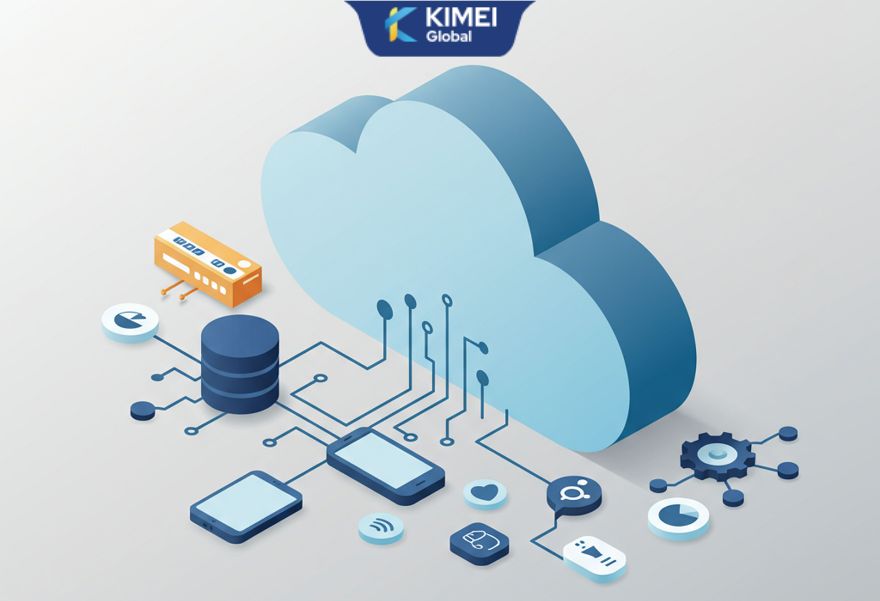
4. Cloud Computing Services
Cloud Computing Services involve the development, migration, and management of applications, infrastructure, and data on demand over the internet. Instead of owning and maintaining physical data centers and servers, businesses leverage resources provided by large third-party cloud providers.

This service is crucial for organizations seeking scalability, flexibility, reduced operational costs, and global reach. Cloud service providers typically categorize their offerings into three main models:
IaaS (Infrastructure as a Service)
- Definition: Provides fundamental computing resources, including virtual machines, storage, and networks.
- Key Focus: The consumer manages the operating system and applications; the provider manages the hardware.
PaaS (Platform as a Service)
- Definition: Offers a complete environment for developing, running, and managing applications without the complexity of managing the infrastructure.
- Key Focus: The consumer manages the application code and deployment; the provider manages the servers, operating systems, and middleware.
SaaS (Software as a Service)
- Definition: Provides ready-to-use software applications over the internet on a subscription basis.
- Key Focus: The consumer simply uses the application; the provider manages everything from the application to the infrastructure.
Examples: Building cloud-native applications, migrating legacy systems to platforms like AWS, Microsoft Azure, or Google Cloud, and developing Software as a Service (SaaS) products.
May be useful to you Top Offshore Software Development Companies in Vietnam
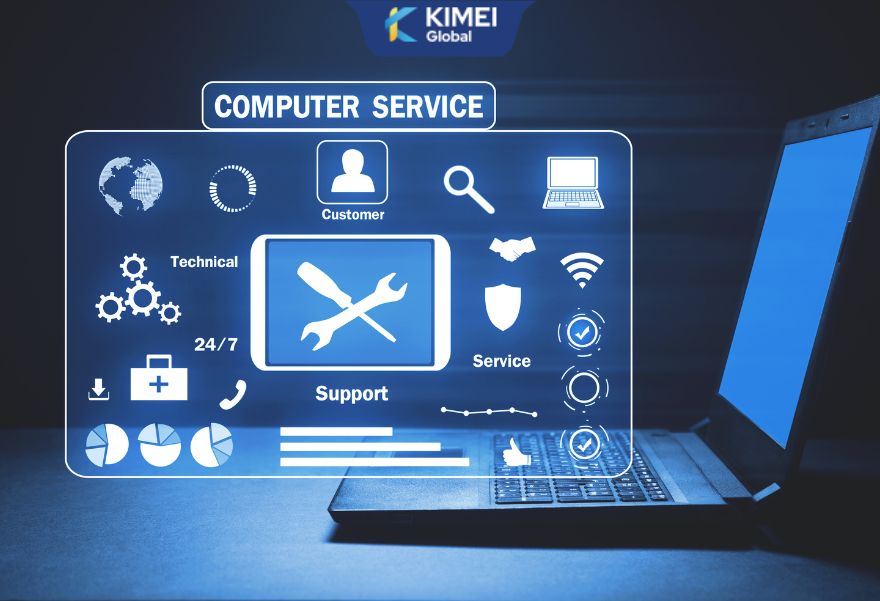
5. Software Maintenance and Support
Software Maintenance and Support refers to the ongoing services provided after a software solution has been deployed. Its purpose is to ensure the existing software remains functional, secure, performant, and relevant throughout its operational lifecycle.

This is a critical phase that safeguards the initial investment and extends the longevity of the software asset. Key Types of Maintenance Services
Corrective (Bug Fixing)
- Definition: Identifying, diagnosing, and repairing faults, errors, or bugs discovered during live operation.
- Focus: Fixing problems (reactive).
Adaptive
- Definition: Modifying the software to keep it operational and compatible with changes in its external environment (e.g., operating system updates, new hardware, third-party API changes, or new regulatory standards).
- Focus: Keeping systems current with the external world.
Perfective
- Definition: Improving the software's performance, usability, and maintainability by refining existing features or optimizing code.
- Focus: Enhancing efficiency and user experience.
Preventive
- Definition: Implementing changes to prevent future problems, such as refactoring code, updating documentation, or improving monitoring tools.
- Focus: Proactive risk reduction and long-term stability.
Comprehensive Software Maintenance and Support packages typically cover the following specific activities:
- Bug Fixing & Incident Resolution: Rapid response and resolution for critical failures and minor operational bugs.
- Performance Monitoring: Continuously tracking system performance, identifying bottlenecks, and optimizing resource usage to ensure fast load times and responsiveness.
- Security Updates & Patching: Applying regular security patches, fixing vulnerabilities, and updating security protocols to protect against new threats.
- System Upgrades & Migration: Implementing major version upgrades for underlying frameworks, operating systems, and databases.
- Adding Minor New Features (Enhancements): Introducing small, incremental feature improvements and enhancements based on user feedback or evolving business needs.
- Technical Documentation Updates: Keeping user manuals, developer documentation, and system architecture diagrams current.
6. Software Testing and Quality Assurance (QA)
Software Testing and Quality Assurance (QA) is a comprehensive set of activities designed to ensure the software product meets the required quality standards and functions exactly as intended. It involves both proactive process control (QA) and reactive defect detection (Testing) throughout the entire software development life cycle.

The primary goal is to prevent defects, improve reliability, and guarantee a high-quality user experience before the software is released to the public. Testing and QA services are categorized based on their focus, timing, and methodology:
Manual Testing
- Definition: Testers manually execute test cases, simulating end-user actions to detect bugs and usability issues.
- Focus: High-quality User Experience (UX) and exploratory testing.
Automated Testing
- Definition: Using specialized tools and scripts to automatically execute test cases and compare results with expected outcomes.
- Focus: Speed, repeatability, and efficiency for regression testing.
Performance Testing
- Definition: Evaluating how the software behaves under various workloads (e.g., stress, load, and endurance testing).
- Focus: Ensuring the application is fast, stable, and scalable under heavy traffic.
Security Testing
- Definition: Identifying vulnerabilities, risks, and threats in the software to prevent malicious attacks and data breaches.
- Focus: Ensuring the application is protected and resilient.
User Acceptance Testing (UAT)
- Definition: The final phase where actual end-users or clients test the software to confirm it meets their business needs and requirements.
- Focus: Formal verification that the software is fit for its intended purpose.
Functional Testing
- Definition: Testing specific functions against the business requirements (e.g., Unit, Integration, and System Testing).
- Focus: Confirming that every feature works as specified.
7. DevOps Services
DevOps (Development and Operations) is a set of practices that combines software development (Dev) and IT operations (Ops). The goal is to shorten the systems development life cycle while providing continuous delivery of high-quality software through automation and collaboration.

DevOps fundamentally shifts the culture, processes, and tools used to deliver applications faster and more reliably. DevOps services focus on automating and streamlining the entire software delivery pipeline:
Implementing CI/CD Pipelines
- Definition: Designing and setting up Continuous Integration (CI) to merge code frequently, and Continuous Delivery/Deployment (CD) to automatically release validated changes to production.
- Focus: Accelerate time-to-market and ensure frequent, reliable releases.
Infrastructure Automation (IaC)
- Definition: Using code and tools (like Terraform or Ansible) to manage and provision computing infrastructure (networks, virtual machines, servers) consistently and automatically.
- Focus: Eliminate manual errors and treat infrastructure like code for version control.
Containerization and Orchestration
- Definition: Implementing container technology (like Docker) to package applications and their dependencies, and using orchestrators (like Kubernetes) to manage and scale them efficiently.
- Focus: Improve portability across environments and ensure high availability.
Continuous Monitoring and Logging
- Definition: Setting up tools (like Prometheus, Grafana, ELK stack) to monitor application and infrastructure performance in real-time, detect issues, and collect logs.
- Focus: Proactive problem resolution and deep insights into system health.
Cloud Adoption and Management
- Definition: Utilizing DevOps principles to optimize applications running on cloud platforms (AWS, Azure, GCP) for maximum efficiency and cost-effectiveness.
- Focus: Maximize cloud ROI through automation and cost governance.
See more: Benefits of IT Outsourcing for Your Business
8. Artificial Intelligence (AI) and Machine Learning (ML) Development
Artificial Intelligence (AI) and Machine Learning (ML) Development involves integrating intelligent features into software solutions through the creation and training of algorithms and statistical models that can learn from data, recognize patterns, and make predictions or decisions with minimal human intervention.

This service transforms static software into dynamic, adaptive systems that grow smarter over time. AI/ML development spans several highly specialized areas:
Predictive Analytics Systems
- Definition: Developing models that analyze historical and real-time data to forecast future outcomes, trends, or probabilities.
- Primary Goal: Inform decision-making and anticipate future events (e.g., predicting equipment failure or customer churn).
Recommendation Engines
- Definition: Building algorithms that suggest relevant products, content, or services to individual users based on their past behavior and preferences.
- Primary Goal: Increase engagement and boost sales conversion rates (common in e-commerce and media).
Natural Language Processing (NLP)
- Definition: Creating systems that allow computers to understand, interpret, and generate human language.
- Primary Goal: Enabling machines to process text and speech (e.g., sentiment analysis or language translation).
Computer Vision Solutions
- Definition: Developing systems that enable machines to interpret and understand visual information from the world (images or videos).
- Primary Goal: Implementing automated visual inspection, facial recognition, or autonomous navigation.
Examples: Building chatbots, developing predictive analytics systems, creating recommendation engines, and implementing computer vision solutions.
KIMEI Global - Your Solid Technology Foundation for Business
Are you looking for a reliable partner to transform your technology ideas into groundbreaking business solutions?
KIMEI Global is a software development company based in Vietnam, offering comprehensive software development services, from initial concept and design to system deployment and maintenance.
Why Choose KIMEI Global?
- Vietnamese Quality, International Standards: We combine the meticulousness and creativity of our Vietnamese engineering team with professional, internationally standardized development processes, ensuring products always achieve high performance and absolute security.
- Custom Software Solutions: KIMEI Global specializes in building software solutions that are precisely "tailor-made" for your business's unique needs—from Web Applications and Mobile Apps to complex ERP/CRM systems.
- Modern Technology Stack: Our team masters the most advanced technologies, such as Cloud Computing (AWS, Azure), AI/ML, and DevOps, helping your business stay ahead in the digital era.

Let KIMEI Global be your technology architect, building the digital future for your business. Contact us today to receive a free consultation for your software project!
- Email: [email protected]
- Website: https://kimei-global.com/
- Hotline: 02836369191
ニュースレターを購読する
最新のニュースをお届けします。