Phát Triển Hệ Thống ERP- Tích Hợp Toàn Diện Cho Doanh Nghiệp Sản Xuất
Giải pháp:
- #Hệ Thống Quản Lý Nguồn Lực (ERP)
Mô hình hợp tác:
- #Dựa trên dự án
Công nghệ:
- #React
- #Node.JS
- #PostgreSQL
- #AWS
1. GIỚI THIỆU
Đây là một Giải pháp ERP được thiết kế dành riêng cho doanh nghiệp sản xuất máy tính và điện tử tại Việt Nam. Việc phát triển hệ thống sản xuất ERP này giúp số hóa quy trình sản xuất thông minh hơn bằng cách tích hợp sâu rộng hệ thống điều hành sản xuất giữa quản lý nguyên vật liệu sản xuất (BOM), tối ưu hóa hiệu suất thiết bị và nhân lực trên toàn chuỗi. Bên cạnh đó, KIMEI Global đưa thêm ý tưởng tích hợp với các bên thứ 3 về tài chính, nhân sự (HRM), bán hàng và logistic để giúp tối ưu quy trình, quản lý dữ liệu tập trung và nâng cao khả năng cạnh tranh.
.png)
2. THÁCH THỨC
Doanh nghiệp A – một đơn vị tiêu biểu trong ngành sản xuất điện tử – đối mặt với những "điểm nghẽn" về vận hành mà các hệ thống ERP truyền thống chưa thể giải quyết triệt để:
- Tích hợp dữ liệu: Kết nối các phòng ban, loại bỏ sự phân tán, dữ liệu thời gian thực giúp ra quyết định nhanh chóng.
- Quản lý chuyên sâu: ERP hiện tại không theo kịp độ phức tạp của BOM. BOM nhiều cấp (multi-level), thay đổi liên tục theo model, phiên bản, lô sản xuất.
ERP có sẵn:
- Khó quản lý BOM theo revision / lifecycle
- Không phản ánh đúng thực tế sản xuất (engineering BOM ≠ manufacturing BOM)
=> Hệ quả dẫn đến: Sai lệch vật tư; Khó kiểm soát tồn kho linh kiện giá trị cao; Chậm phản ứng khi thay đổi thiết kế
3. Đo lường được hiệu suất thiết bị theo thời gian thực. Bởi vì ERP truyền thống chỉ ghi nhận kết quả, không phản ánh hiệu suất vận hành gây thiếu khả năng:
- Theo dõi OEE, downtime, nguyên nhân dừng máy
- Liên kết dữ liệu thiết bị với kế hoạch sản xuất
- Dữ liệu máy móc thường:
- Nằm rời rạc
- Không kết nối được với ERP
4. Tích hợp linh hoạt với hệ sinh thái nội địa có sẵn thay vì các ERP đóng gói khả năng tích hợp bị hạn chế lớn. Do doanh nghiệp đang sử dụng các bên thứ ba trong hệ sinh thái kế toán MISA, đơn vị logistic trong nước và đã có sẵn hệ thống CRM.
3. GIẢI PHÁP
Designing ERP Around Factory Operations - Not Software Modules.
KIMEI Global thực hiện chiến lược "Operation-Centric Transformation" (Chuyển đổi lấy vận hành làm trung tâm). Chúng tôi không coi đây là một dự án cài đặt phần mềm, mà là quá trình tái cấu trúc nền tảng vận hành số dựa trên thực tế tại xưởng sản xuất.
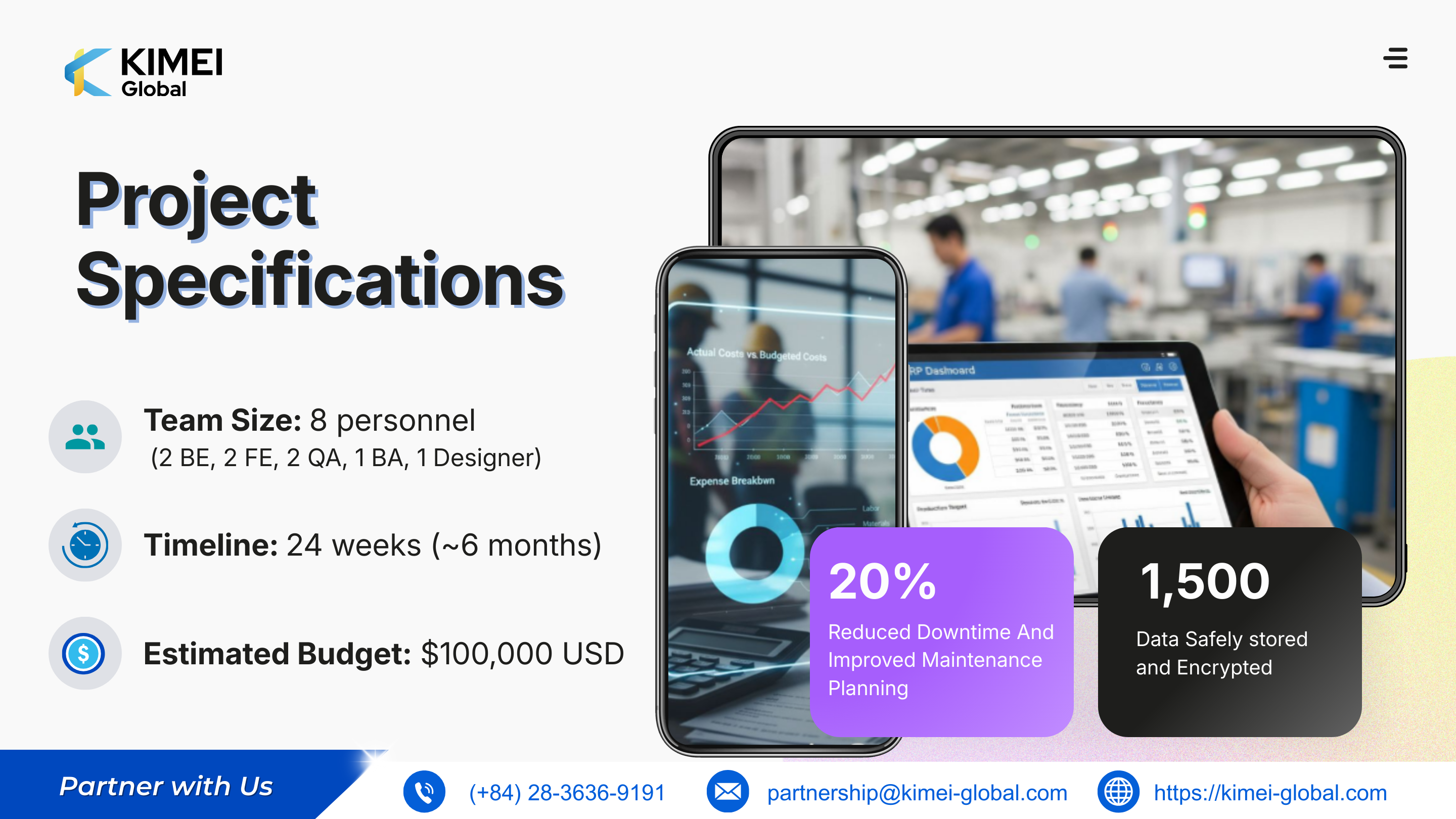
- Thời gian thực hiện: 24 Weeks ~ 6 Months
- Team size: 8 nhân sự gồm 2 BE, 2 FE, 2 QA, 1 BA, 1 Designer
- Chi phí ước tính: 100,000 USD
- Tech Stack được sử dụng:
Backend: NestJS, NodeJS
Frontend: RectJS, React Native (Mobile)
Database: PostgreSQL
Cloud & Hosting: AWS, S3
DevOps: Docker, GitHub Actions, CI/CD
Security: OAuth 2.0, JWT, SSL/TLS, Firewall, Rate Limiting, CloudFlare, Sentry
Caching: Redis
Email & Notifications: Socket.io, AWS SES, SendGrid, Firebase, OneSignal
Version Control: GitHub
API Documentation: Swagger, GraphQL
Bước 1: Tìm hiểu nhu cầu doanh nghiệp
- Phân tích luồng vận hành thực tế từ:
- BOM → Sản xuất → Nhân lực → Thiết bị →Tích hợp các bên thứ 3 (HRM/Logistic/CRM)
- Xác định các pain point gây tổn thất lớn nhất về chi phí và hiệu suất
Thiết kế hệ thống dựa trên quy trình thực, không ép doanh nghiệp thay đổi để “vừa ERP”
Bước 2: Xây dựng ERP với Core Modules cho nhà máy
A) Quản lý BOM (Bill of Materials)
Mục tiêu: Kiểm soát BOM theo từng revision, đảm bảo cấp phát đúng vật tư, hỗ trợ thay đổi thiết kế nhanh mà không gián đoạn sản xuất. Hạn chế hao hụt trong quá trình chuyển đổi từ bán thành phẩm/thành phẩm thô sang sản phẩm hoàn thiện.
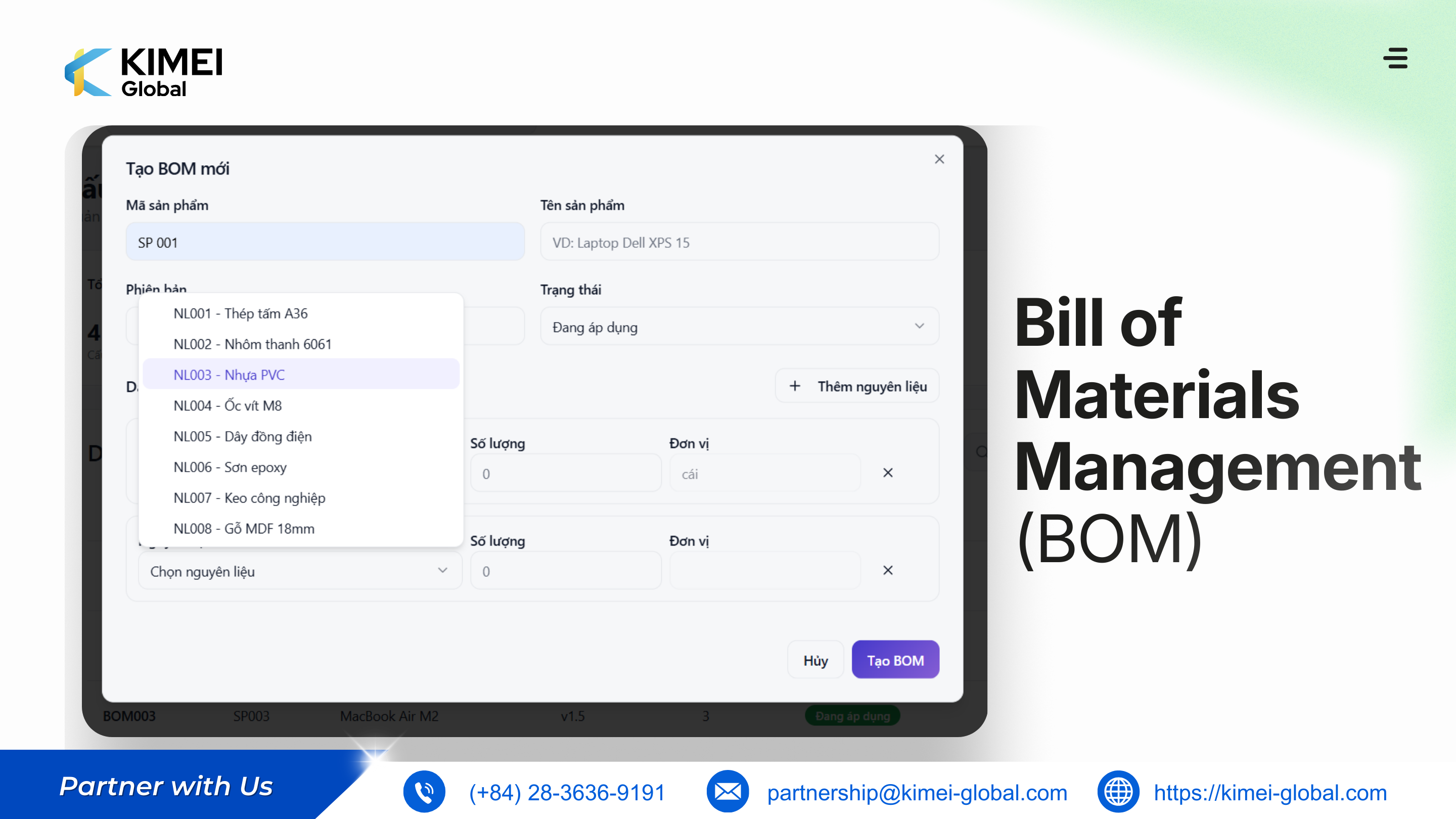
Chức năng:
- BOM đa cấp & theo revision: Quản lý cấu trúc BOM nhiều cấp, lưu lịch sử thay đổi để đảm bảo mỗi lệnh sản xuất luôn sử dụng đúng phiên bản BOM.
- So sánh BOM & kiểm soát thay đổi: So sánh nhanh giữa các revision để đánh giá tác động đến nguyên liệu, định mức tiêu hao và chi phí trước khi áp dụng.
- Ước lượng chi phí theo BOM: Tự động tính tiêu hao và chi phí sản xuất dựa trên giá nguyên liệu hiện tại, giúp kiểm soát chi phí ngay từ khâu lập kế hoạch.
- Kiểm tra khả năng sản xuất theo tồn kho: Đối chiếu BOM với tồn kho thực tế để xác định nguyên liệu có đủ cho số lượng yêu cầu, hạn chế thiếu vật tư và thất thoát WIP.
B) Kế hoạch sản xuất
Mục tiêu: Dự báo nhu cầu và hoạch định kế hoạch sản xuất giúp doanh nghiệp kiểm soát tốt nhu cầu vật tư, giảm rủi ro thiếu nguyên liệu, tối ưu năng lực sản xuất và đảm bảo tiến độ giao hàng cho các đơn hàng quy mô lớn.
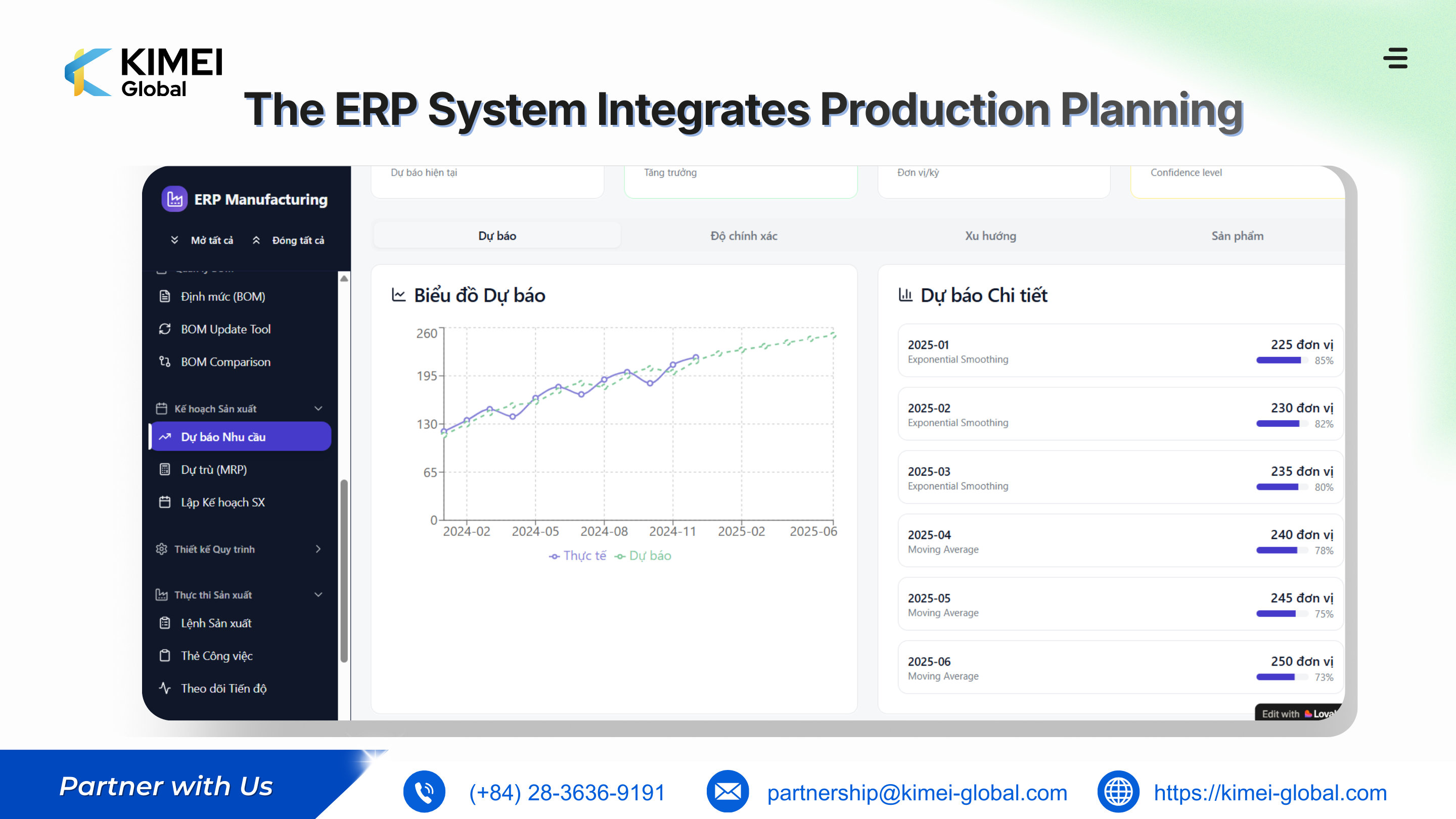
Chức năng: Hệ thống ERP tích hợp Kế hoạch sản xuất – BOM – Tồn kho để tự động:
- Hoạch định sản lượng cần sản xuất theo đơn hàng và forecast.
- Sinh nhu cầu nguyên vật liệu theo thời gian, đề xuất kế hoạch mua hàng phù hợp.
- Lập lịch sản xuất chi tiết theo ngày/tuần, phân bổ lệnh sản xuất vào từng trạm và cân bằng tải theo năng lực.
C) Thiết Kế Quy Trình và Thực Thi Sản Xuất
Mục tiêu: Thông qua ứng dụng hệ thống ERP trong sản xuất, doanh nghiệp có thể theo dõi, giám sát các hoạt động sản xuất, bao gồm báo cáo số liệu, kiểm tra nguyên vật liệu, quản lý hàng hóa từ nhiều phòng ban khác nhau. Từ đó, doanh nghiệp phân tích, hoạch định chính xác về quy trình sản xuất cũng như xử lý vấn đề nhanh chóng, kịp thời.
Chức năng:
- Theo dõi sản xuất theo thời gian thực
Sản lượng, % hoàn thành và lỗi được ghi nhận trực tiếp từ dây chuyền và thiết bị quét, phản ánh đúng tình trạng vận hành thực tế.
- Đo hiệu suất theo giờ và theo ca
Hiệu suất được tính theo dây chuyền, ca sản xuất và người quản lý ca, giúp phát hiện sớm điểm nghẽn và ca hoạt động kém hiệu quả.
- Giảm thời gian ngừng máy
Ghi nhận nguyên nhân dừng máy theo thời gian thực, hỗ trợ phân tích downtime và chủ động lập kế hoạch bảo trì.
- Kiểm soát hao hụt vật tư
So sánh tiêu hao thực tế với định mức BOM theo từng lệnh sản xuất, giảm thất thoát khi chuyển từ bán thành phẩm sang thành phẩm hoàn thiện.
- Tăng tính minh bạch trong vận hành
Dữ liệu sản xuất, chất lượng và tiến độ được tập trung trên một hệ thống duy nhất, giúp quản lý ra quyết định nhanh và chính xác hơn.
Bước 3: Tích hợp nền tảng ERP
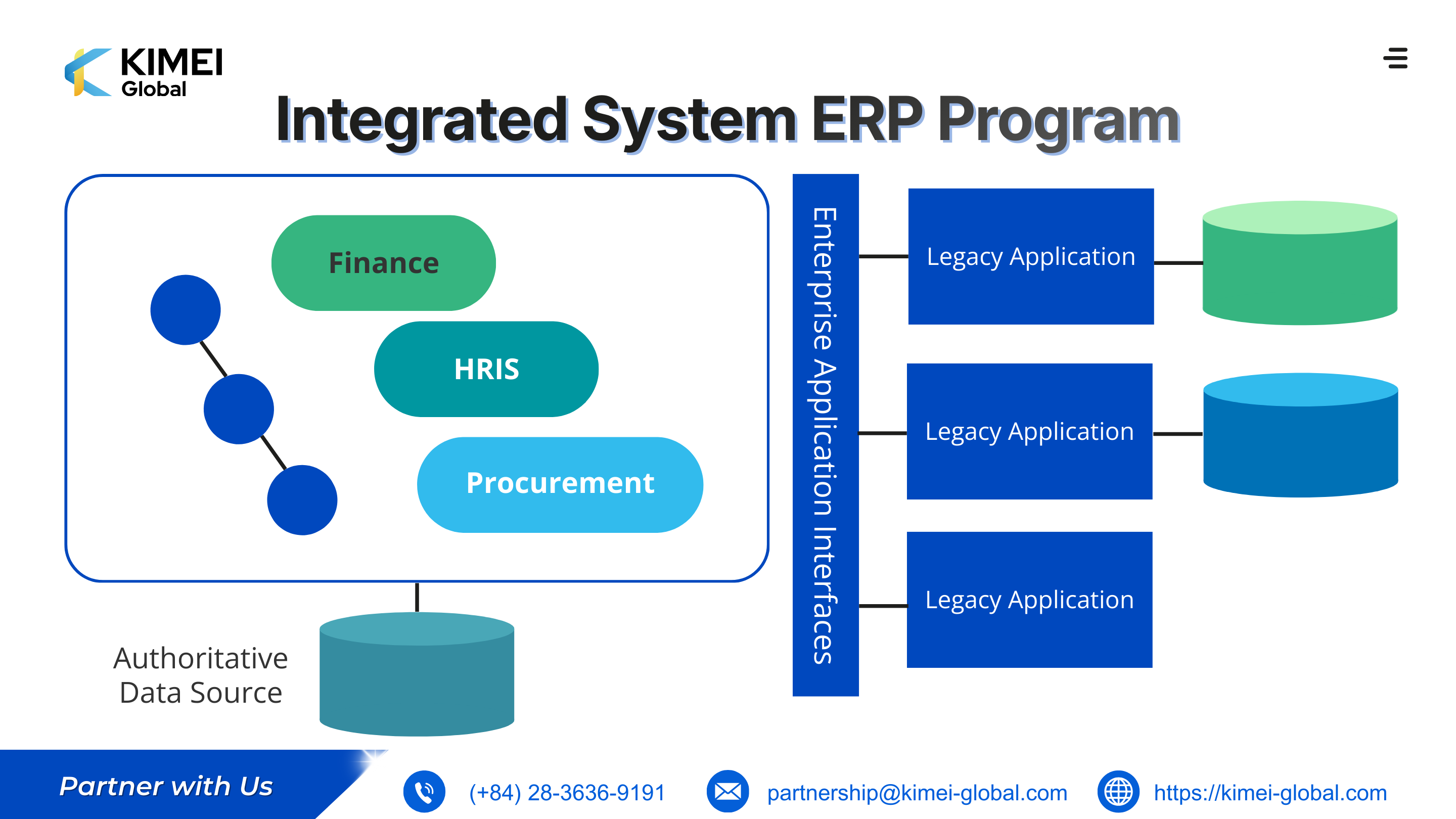
ERP được thiết kế như trung tâm dữ liệu, sẵn sàng tích hợp với các bên thứ 3 mà doanh nghiệp đang sử dụng như:
- Hệ thống kế toán nội địa
- Đơn vị logistics trong nước
- CRM và các hệ thống nội bộ khác
4. KẾT QUẢ
Chúng tôi mang tới quy trình quản trị thực chiến giúp doanh nghiệp:
- Tăng 95% độ chính xác trong báo cáo sản xuất.
- Tăng hiệu suất sản xuất (OEE) lên đến 25%: tối ưu hóa trạm làm việc và cân bằng tải giữa các dây chuyền giúp giảm thời gian chết và tăng cường hiệu suất hoạt động của mỗi trạm.
- Cải thiện việc quản lý nguyên vật liệu, giảm hao hụt 20%: Việc theo dõi tiêu hao vật tư và so sánh với định mức BOM giúp phát hiện sớm sự chênh lệch và điều chỉnh kịp thời.
- Giảm thời gian ngừng máy (downtime) và cải thiện kế hoạch bảo trì: Việc ghi nhận và phân loại thời gian ngừng máy theo nguyên nhân giúp phân tích đúng điểm nghẽn trong quy trình sản xuất. Bên cạnh đó, giải pháp tích hợp với hệ thống bảo trì cho phép giảm thời gian chết, lập kế hoạch bảo trì chủ động và nâng cao hiệu suất của thiết bị.
Sau khi triển khai hệ thống ERP với tính năng quản lý quy trình và sản xuất này, doanh nghiệp có thể kỳ vọng vào việc nâng cao hiệu suất, giảm hao hụt và tối ưu hóa quy trình sản xuất. Doanh nghiệp sẽ biết chính xác lãi/lỗ trên từng đơn hàng ngay khi kết thúc, nhờ vào tự động tập hợp chi phí nguyên vật liệu và nhân công. Điều này giúp tăng cường khả năng đáp ứng đơn hàng, giảm chi phí vận hành và nâng cao lợi nhuận.
Về KIMEI Global
Chúng tôi dẫn đầu trong lĩnh vực Phát triển Phần mềm và ODC. Liên hệ để phát triển dự án của bạn ngay hôm nay!
📍 Email: [email protected]
📍 Phone: (+84) 28 3636 9191
Đăng ký nhận bản tin
Cập nhật tin tức mới nhất của chúng tôi.
Đăng ký nhận bản tin
Cập nhật tin tức mới nhất của chúng tôi.